
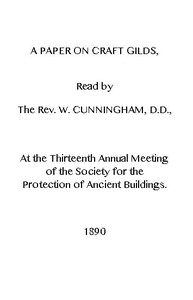
Craft Gilds by W. Cunningham
Okay, grab a cup of tea and get comfy, because I have to tell you about a history book that genuinely surprised me. I picked up ‘Craft Gilds’ by W. Cunningham thinking, ‘Right, another dusty tome about the olden days.’ But oh, I was wrong. This book breathes life into the shops and streets of medieval Europe, where if you wanted to be a tailor, you had to join the secret brotherhood of tailors. Seriously.
The Story
The book walks you through the rise and (spoiler alert) slow collapse of these craft guilds - basically the unions of their day, but way more dramatic. Cunningham starts back when a guild was like a family: you’d live with your master, learn the tricks of the trade, kind of like an apprenticeship without modern labor laws. Over the centuries, though, these groups turned into powerful, territorial clubs. They controlled prices, limited competition, and even ran their own courts. By the end, new markets, industrialization, and the guy named Adam Smith came along and started writing fancy theories. The guilds couldn’t flex their muscle like before, and eventually, they faded away. The plot twists are real.
Why You Should Read It
What got me wasn’t the dates or the politics - though Cunningham is sharp as a tack on that front. It’s the everyday people. This book made me feel like I was standing in a cramped medieval shop, watching an angry woman shout at a baker for selling her shrunken bread. There’s a whole chapter on guilds sorting out fights among rival street vendors in London — hello, petty drama. And underneath all the regulations, you see a desperate human need: security and meaning. The craft isn’t just a job; it’s identity. Cunningham manages to riff on that without getting all ‘academic.’ There’s even a nod to how Chinese craft traditions were doing their own thing at the same time, which just makes the whole world feel smaller than you’d think.
Final Verdict
Look, this is an old book now (published way back), so the writing style feels like your smart, slightly proper grandfather telling you a story. It jumps around a little, but trust me — it’s completely rewarding if you give it a chance. The audience isn’t just history professors poring over dusty texts. If you’re the kind of person who loves watching The Crown but also spends one lazy Sunday learning about the spice trade in 14th-century Bruges, you’re going to love this. Cunningham cracks open this lost global economy and shows you that they tussled over patents, wages, sexism, and taxes just like we do today. **Perfect for dreamers who want the real dirt on people**, or anyone working a nine-to-five and wondering, ‘How did we even get small talk about office coffee in the first place?’ This answers that, through a loud, ambitious, flawed, and fascinating crowd of artisans.
The copyright for this book has expired, making it public property. Share knowledge freely with the world.


David Martinez
10 months agoI started reading this with a critical mind, the emphasis on ethics and sustainability within the topic is commendable. This has become my go-to guide for this specific topic.