
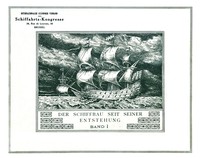
Der Schiffbau seit seiner Entstehung, Band 1 by E. van Konijnenburg
Let's be clear from the start: Der Schiffbau seit seiner Entstehung, Band 1 is a specialized history. But if you give it a chance, it opens up a world you probably never thought about. Emile van Konijnenburg, writing in the early 1900s, sets out to trace the entire story of shipbuilding from its prehistoric beginnings.
The Story
Think of this less as a plot and more as an epic, slow-motion invention. The book starts with humanity's first wobbly attempts at water travel—rafts, dugout canoes, and skin boats. Konijnenburg acts as our guide, showing how necessity and accident led to better designs. He explains how ancient Egyptians figured out hull shapes, how Vikings mastered the art of the clinker-built longship, and how medieval shipwrights slowly developed the skeleton-first construction that allowed for bigger, ocean-going vessels. It's a story told through the evolution of tools, materials, and that one brilliant idea that changed everything. The 'characters' are the ships themselves, and their development is the driving narrative.
Why You Should Read It
This book changed how I look at the world. Now, when I see a bridge or a skyscraper, I think of the shipbuilders. They were the original aerospace engineers, solving problems of weight, strength, and hydrodynamics centuries ago. Konijnenburg's passion is obvious. He isn't just reporting; he's admiring the ingenuity. He'll spend pages on the development of a single joint or the adoption of the sternpost rudder, and his excitement makes you see why it was a world-changing breakthrough. It's a humbling reminder of how much collective genius is baked into the ordinary things around us, especially something as complex as a ship.
Final Verdict
This is not a book for everyone. It's dense, technical in places, and in German. But if you're the kind of person who loves deep-dive histories, documentaries about how things are made, or you have a soft spot for maritime history, this is a treasure. It's perfect for model shipbuilders, aspiring naval architects, or any curious reader who wants to understand the how behind humanity's greatest adventures. Think of it as the ultimate prequel to every sea story ever told. You'll never look at a boat the same way again.
This publication is available for unrestricted use. Feel free to use it for personal or commercial purposes.
Betty Sanchez
1 year agoTo be perfectly clear, the narrative structure is incredibly compelling. Don't hesitate to start reading.
Jackson Smith
8 months agoText is crisp, making it easy to focus.
Emma Martin
1 year agoI stumbled upon this title and the plot twists are genuinely surprising. I couldn't put it down.
Mary Thomas
1 year agoGood quality content.










John Hernandez
9 months agoAfter hearing about this author multiple times, it challenges the reader's perspective in an intellectual way. This story will stay with me.