
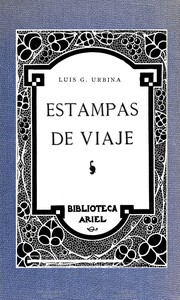
Estampas de viaje: España en los días de la guerra by Luis G. Urbina
Luis G. Urbina's book isn't a novel with a traditional plot. Think of it as a series of vivid postcards, or 'estampas,' sent from a journey. Urbina, a respected Mexican poet and writer, traveled through Spain in the 1910s. His trip coincided with a turbulent period: social tensions were high, political instability was the norm, and the shadow of the Great War loomed over Europe, threatening to pull neutral Spain into the conflict.
The Story
There's no main character or storyline in the usual sense. The 'story' is Urbina's journey itself. He moves through cities like Madrid and Barcelona, observing everything. He describes bustling plazas, quiet churches, and lively theaters. But his keen eye doesn't just see the beautiful architecture or taste the good wine. He listens to the people. He captures snippets of worried conversation, notes the weariness in faces, and senses the public anxiety bubbling beneath the surface of ordinary days. The book is a portrait of a nation holding its breath, waiting for a storm to break.
Why You Should Read It
What makes this special is Urbina's voice. He's not a journalist filing a report; he's a poet with a traveler's curiosity. His writing is sharp, descriptive, and often surprisingly intimate. You feel like you're walking beside him, seeing what he sees and feeling the same unease. He has a gift for finding the significant detail—a newspaper headline, a military parade passing by, the way a crowd reacts to news—that tells you more about the mood of a country than any statistic could. It turns history from a list of dates and battles into a living, breathing experience.
Final Verdict
This book is perfect for readers who love immersive travel writing or history that focuses on the human experience. If you enjoyed books like Rebecca West's 'Black Lamb and Grey Falcon' for its depth of observation, or if you simply like the idea of time-traveling through a poet's eyes to a pivotal moment, you'll find 'Estampas de viaje' fascinating. It's a quiet, thoughtful read that offers a unique and personal window into a world on the edge of dramatic change.
This content is free to share and distribute. Use this text in your own projects freely.
Ashley Jones
1 year agoA bit long but worth it.
Ashley Smith
1 year agoBased on the summary, I decided to read it and the plot twists are genuinely surprising. Definitely a 5-star read.
Oliver Thompson
10 months agoWithout a doubt, the atmosphere created is totally immersive. A true masterpiece.
Karen Harris
2 years agoThis is one of those stories where the clarity of the writing makes this accessible. I will read more from this author.





Emma Brown
11 months agoI have to admit, the author's voice is distinct and makes complex topics easy to digest. Don't hesitate to start reading.