
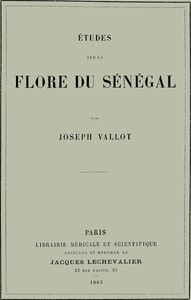
Études sur la flore du Sénégal by Joseph Vallot
Let's be clear: this isn't a novel. You won't find a three-act structure or a cast of characters in the traditional sense. Instead, the 'story' is the story of exploration itself. Joseph Vallot, a dedicated French botanist, arrived in Senegal in the late 19th century with a monumental task: to systematically document the plant life of a region that was, to European science, largely a blank slate.
The Story
The book follows his process. It's a meticulous catalog, but reading between the lines reveals the narrative. It's the story of long, hot journeys into the interior, of careful collection and preservation of fragile specimens, and of the intellectual challenge of classification. Each plant entry—from towering baobabs to tiny ground orchids—represents a small victory. The 'plot' is the gradual filling in of that blank slate, species by species, family by family. The conflict is subtle: it's the struggle against the elements, the limitations of existing knowledge, and the sheer physical and mental effort required to create something foundational from scratch.
Why You Should Read It
I loved this book for its quiet intensity. Vallot's voice is professional, but his passion leaks through. You can feel his excitement in a detailed description of a flower's structure and his frustration when a specimen is too damaged to identify. It makes you appreciate the bedrock of science—the patient, often lonely work of observation that comes before the big theories. Reading it is like looking over the shoulder of a master craftsman. It also offers a fascinating, if indirect, snapshot of colonial-era science and its relationship with the natural world. It's not a critique of that era, but a primary source that lets you draw your own conclusions.
Final Verdict
This is a niche but deeply rewarding read. It's perfect for history of science enthusiasts, gardeners with a curious mind, or anyone fascinated by the age of exploration. If you enjoy the idea of 'slow non-fiction'—a book that requires you to lean in and appreciate the granular details—you'll find a lot to love here. It's not a breezy beach read, but for the right reader, it’s a captivating portal into a moment when an entire landscape was being seen, truly seen, for the first time through scientific eyes.
This is a copyright-free edition. Feel free to use it for personal or commercial purposes.
Michael White
1 year agoThis book was worth my time since the depth of research presented here is truly commendable. Exceeded all my expectations.
David Wilson
1 year agoThe fonts used are very comfortable for long reading sessions.
Lucas Robinson
2 years agoHonestly, the plot twists are genuinely surprising. Don't hesitate to start reading.
Emma Jackson
2 years agoBeautifully written.

Kenneth Moore
1 year agoI started reading out of curiosity and the flow of the text seems very fluid. Highly recommended.