
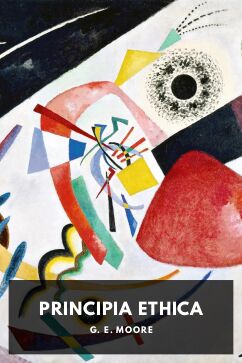
Principia Ethica - G. E. Moore
Don't let the old-fashioned title scare you off. Principia Ethica isn't a story with characters and a plot; it's an argument. A really careful, step-by-step argument about the foundation of ethics. Moore starts by pointing out what he calls the 'naturalistic fallacy.' This is the mistake of defining 'good' (an abstract, non-natural quality) by pointing to something natural or tangible, like 'happiness,' 'evolutionary success,' or 'what God commands.' He says that's like defining 'yellow' by pointing to a lemon. Yellow is just yellow—you experience it directly. He argues 'good' is the same. You can't break it down into parts; you just recognize it.
The Story
The 'story' here is the journey of Moore's logic. He clears the deck of old ideas, showing why utilitarianism and other popular ethics of his time are built on this shaky foundation of defining the indefinable. Then, he builds his own view. Since we can't define 'good,' how do we know what's good? Through a kind of moral intuition. And what are the most valuable things we can intuit? He famously points to 'the pleasures of human intercourse and the enjoyment of beautiful objects'—friendship, love, and art. The book's drama is in watching him meticulously take apart common sense to rebuild a surprising and personal vision of what makes life worth living.
Why You Should Read It
I found this book strangely liberating. In a world full of people telling you what's right and why, Moore gives you permission to stop and say, 'But wait, what do you even mean by 'good'?' It sharpens your thinking. You'll start spotting the 'naturalistic fallacy' everywhere—in politics, advertising, everyday debates. His focus on friendship and beauty as core goods is also refreshingly human. It moves ethics out of the abstract and into the heart of daily life. It's not an easy read, but wrestling with it feels like a workout for your moral reasoning.
Final Verdict
This is not for the casual reader looking for a narrative. It's perfect for the curious person who loves big ideas, the student of philosophy or psychology, or anyone who has ever felt frustrated by circular arguments about values. If you enjoyed the logical puzzles of Gödel, Escher, Bach or the foundational questions in Sophie's World, you'll find a deep and challenging predecessor here. Approach it slowly, argue with it in the margins, and you might just see the world—and the word 'good'—differently afterward.
This publication is available for unrestricted use. Distribute this work to help spread literacy.
Elizabeth Rodriguez
1 year agoExtremely helpful for my current research project.
Jennifer Jackson
10 months agoHaving followed this topic for years, I can say that the insights into future trends are particularly thought-provoking. A mandatory read for anyone in this industry.
Margaret Harris
10 months agoI started reading this with a critical mind, the language used is precise without being overly academic or confusing. This should be on the reading list of every serious professional.
Margaret Gonzalez
5 months agoUnlike many other resources I've purchased before, the structural organization allows for quick referencing of key points. This should be on the reading list of every serious professional.





Barbara Thomas
1 year agoIt effectively synthesizes complex ideas into a coherent whole.