
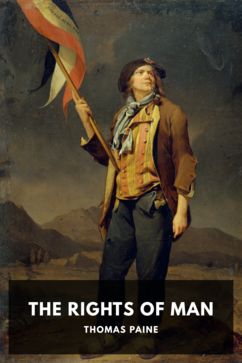
The Rights of Man - Thomas Paine
Let's set the scene. It's the 1790s. The American Revolution just happened, and the French Revolution is shaking Europe to its core. In England, a conservative thinker named Edmund Burke publishes a scathing attack on the French revolutionaries, praising tradition and monarchy. Thomas Paine, the radical writer who helped inspire the Americans, fires back with 'The Rights of Man'.
The Story
There's no traditional plot here. Instead, Paine builds an argument, piece by logical piece. He starts by completely rejecting Burke's focus on the past. Why should 'the dead' control the living? He then lays out his vision: all people are born with natural rights. Government isn't a sacred inheritance; it's a practical tool we create through a social contract to protect those rights. The only legitimate government, he argues, is one based on the consent of the governed—a republic. He imagines a society with representative democracy, welfare for the poor, and public education, funded by taxing the enormous wealth of the aristocracy. The 'story' is the demolition of one world view and the blueprints for a new one.
Why You Should Read It
You should read it because it makes foundational political ideas feel urgent and personal. This isn't a dry theory. It's a manifesto written with conviction and clarity. Paine speaks directly to the common person, not scholars. When he asks why a humble worker should bow to someone whose only merit is being born in a palace, you feel the injustice. His belief in human potential and his outrage at wasted lives are still powerful today. Reading it connects the dots between the revolutions of the past and every modern debate about equality, representation, and social justice. It’s the philosophical fuel for the modern world.
Final Verdict
This book is perfect for curious readers who want to understand the roots of democracy but hate stuffy academic writing. It's for anyone who enjoys a brilliantly constructed argument, even if they don't agree with every point. History buffs will love the front-row seat to a pivotal debate. Most of all, it's for people who like books that challenge them to question the status quo. Be warned: Paine's vision is optimistic and his tone is combative. You might finish it feeling inspired, aggravated, or both—but you definitely won't be bored.
You are viewing a work that belongs to the global public domain. You can copy, modify, and distribute it freely.
Thomas Gonzalez
11 months agoInitially, I was looking for a specific answer, but the author doesn't just scratch the surface but goes into meaningful detail. I'll be recommending this to my students and colleagues alike.
James Harris
7 months agoThe clarity of the introduction set high expectations, and the historical context mentioned in the early chapters is quite enlightening. Highly recommended for those seeking credible information.
James Martinez
8 months agoThe clarity of the concluding remarks is very professional.
Susan Williams
4 months agoThe information is current and very relevant to today's needs.






George Thompson
7 months agoI took detailed notes while reading through the chapters and the author clearly has a deep mastery of the subject matter. This has become my go-to guide for this specific topic.