
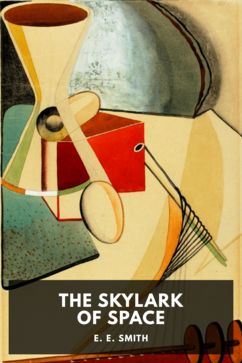
The Skylark of Space - E. E. Smith
Let's set the scene: it's 1928. Airplanes are still a novelty, and here comes E.E. 'Doc' Smith, writing a story about flying to other stars. This book didn't just predict space travel; it invented the blueprint for almost every epic space adventure that followed.
The Story
It starts with Dr. Richard Seaton, a genius chemist, who stumbles upon a revolutionary discovery while messing around in his lab. He finds a way to unlock the power within copper, creating an element he calls 'X' that allows for faster-than-light travel. His scheming colleague, Marc 'Blackie' DuQuesne, steals the secret and sells it to a ruthless businessman, World Steel Corporation head Steel. DuQuesne and Steel immediately plan to use the power for conquest. Seaton, along with his wealthy inventor friend Martin Crane and the woman he loves, Dorothy Vaneman, has only one option: build a spaceship—the Skylark—first and chase them across the galaxy to stop them. Their journey takes them to strange worlds with even stranger inhabitants, facing cosmic dangers and moral dilemmas along the way.
Why You Should Read It
You don't read 'The Skylark of Space' for gritty realism or deep psychological drama. You read it for the sheer, jaw-dropping sense of wonder. Smith's imagination is massive. He throws out ideas about alien civilizations, weird physics, and cosmic scales that must have blown readers' minds a century ago. The characters are straightforward—Seaton is the ultimate competent hero, Crane is the loyal sidekick, Dorothy is the 'love interest' who still gets to be clever and brave for her time. Their goodness is simple and bright, a direct contrast to the cartoonish but effective villainy of DuQuesne. It's comforting, like watching the heroes in an old serial. The prose is energetic, propelling you from one cliffhanger to the next.
Final Verdict
This book is a must-read for any science fiction fan who wants to understand where the genre came from. It's perfect for someone who loves classic adventure tales, doesn't mind a bit of dated dialogue, and wants to experience the raw, enthusiastic roots of space opera. If you enjoy the works of Isaac Asimov or Robert Heinlein, you'll see their literary grandfather in Doc Smith. Approach it not as a modern novel, but as a historical artifact packed with excitement. You'll be surprised by how fast and fun this century-old story still is.
Legal analysis indicates this work is in the public domain. Use this text in your own projects freely.
Susan Anderson
2 months agoGiven the current trends in this field, the case studies and practical examples provided add immense value. This is a solid reference for both beginners and experts.
Karen Thompson
6 months agoI've been looking for a reliable source on this topic, and the quality of the diagrams and illustrations (if applicable) is top-notch. It cleared up a lot of the confusion I had previously.
Noah Davis
2 years agoThis is one of those stories where the storytelling feels authentic and emotionally grounded. Exceeded all my expectations.
Sarah Miller
11 months agoThe formatting on this digital edition is flawless.



Robert Davis
8 months agoUnlike many other resources I've purchased before, the footnotes provide extra depth for those who want to dig deeper. The insights gained here are worth every minute of reading.