
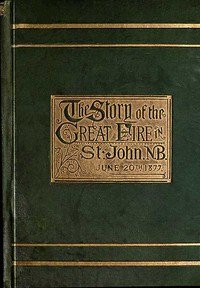
The Story of the Great Fire in St. John, N.B., June 20th, 1877 by George Stewart
George Stewart's account of the 1877 St. John fire isn't a distant history lesson. He was an eyewitness, and he writes with the urgency of someone who just lived through it. The book drops you right into a bustling port city on a windy summer day, completely unaware that a small spark in a warehouse is about to unleash hell.
The Story
The fire starts simply, almost innocently. But fueled by high winds, dry timber, and a bit of bad luck, it explodes into an unstoppable force. Stewart maps its terrifying path block by block. You follow the frantic efforts to fight it with outdated equipment, the heartbreaking decisions families make as they flee with only what they can carry, and the sheer speed with which neighborhoods vanish into ash. The fire doesn't discriminate—it consumes homes, businesses, churches, and landmarks. The real story begins as the last embers die. Stewart details the immediate aftermath: the makeshift refugee camps, the struggle for food and shelter, and the national outpouring of aid that was sometimes met with shocking instances of theft and profiteering.
Why You Should Read It
What stuck with me wasn't just the scale of destruction, but the human drama Stewart captures. This book shows people at their absolute best and worst. You'll read about sailors risking their ships to rescue strangers, and about looters picking through still-smoldering ruins. It made me think about my own community. How would we hold together? Stewart doesn't shy away from the tough parts—the political finger-pointing, the debates about rebuilding with brick instead of wood, the stark reality of who had the means to recover and who was left behind. It's a raw, unvarnished look at disaster recovery that feels incredibly relevant.
Final Verdict
This is a must-read for anyone who loves real-life survival stories or narratives about community resilience. It's perfect for history buffs who prefer gripping primary sources over textbook summaries, and for readers of narrative nonfiction who enjoy authors like Erik Larson. The writing is direct and clear, putting you right on the smoky streets. Fair warning: it's a sobering read at times, but ultimately it's a powerful reminder of both the fragility of our world and the stubborn strength of the people in it.
Legal analysis indicates this work is in the public domain. Use this text in your own projects freely.
David Nguyen
2 years agoGreat digital experience compared to other versions.
Thomas Rodriguez
1 year agoA must-have for anyone studying this subject.





Kevin Lopez
10 months agoVery helpful, thanks.