
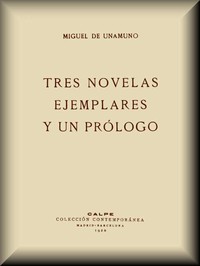
Tres novelas ejemplares y un prólogo by Miguel de Unamuno
Let's break down what you're getting into with this classic. The book opens with a lengthy prologue, which is really Unamuno's personal manifesto. He's not just introducing the stories; he's arguing against realism, against pretty writing for its own sake. He wants fiction that claws at the big questions of existence, identity, and faith. It's like listening to a brilliant, slightly agitated professor explain his life's work before showing you the results.
The Story
The three tales that follow are stripped-down and powerful. 'Two Mothers' is a brutal look at obsession, where a woman who can't have children manipulates another man into fathering a child with her rival, just so she can claim a twisted form of motherhood. 'The Marquis of Lumbría' is a dark comedy of family pride and hidden shame, where the need to uphold appearances destroys everyone involved. Finally, 'Nothing Less Than a Whole Man' is perhaps the most famous, following a simple, strong man named Alejandro who becomes the object of a destructive rivalry between a doctor and a lawyer, each wanting to completely shape his soul. These aren't plots full of action; they're psychological pressure cookers.
Why You Should Read It
I keep coming back to Unamuno because he treats his characters with brutal honesty. He pokes and prods at their deepest insecurities—their pride, their religious doubts, their fear of being nothing. He shows how our ideas about ourselves can become cages. The priest in 'The Marquis of Lumbría' is a great example: he's so afraid of losing his saintly image that he can't live a real life. Unamuno makes you ask: How much of who I am is just a performance? It's uncomfortable, but in a way that feels important.
Final Verdict
This book is perfect for readers who love existential thinkers like Dostoevsky or Sartre, but prefer their philosophy wrapped in tense, human drama. It's also great for anyone who enjoys short stories that leave a lasting mark. If you want a light, easy read with a clear happy ending, look elsewhere. But if you're up for a challenging, thought-provoking dive into the human heart with all its contradictions, Unamuno's 'Three Exemplary Novels' is a masterpiece waiting for you. Just be prepared to question a few things about yourself when you're done.
The copyright for this book has expired, making it public property. Enjoy reading and sharing without restrictions.
Joseph Lopez
5 months agoHonestly, the narrative structure is incredibly compelling. Worth every second.
Linda Jackson
1 year agoI have to admit, the storytelling feels authentic and emotionally grounded. Don't hesitate to start reading.
Emma Scott
2 years agoAs someone who reads a lot, it manages to explain difficult concepts in plain English. I couldn't put it down.
Lisa Hernandez
1 year agoAmazing book.


Linda Lopez
11 months agoMy first impression was quite positive because the quality of the diagrams and illustrations (if applicable) is top-notch. Simple, effective, and authoritative – what else could you ask for?