
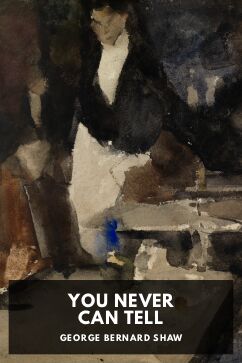
You Never Can Tell - George Bernard Shaw
If you think your family reunions are complicated, wait until you meet the Clandon family in George Bernard Shaw's You Never Can Tell. Written in 1897, this play feels fresher and funnier than many modern comedies.
The Story
Mrs. Clandon, a writer who champions women's rights, returns to England after nearly two decades abroad with her three grown children: Gloria, Dolly, and Philip. They're a tight-knit, forward-thinking unit. The kids are clever and have been raised to question everything, especially old-fashioned ideas about marriage and family. Their father is a vague, absent figure from their mother's past.
Their holiday at a seaside resort gets interesting fast. Gloria, the serious eldest daughter, catches the eye of a struggling but earnest young dentist, Valentine. Meanwhile, the family needs to rent a villa. The polished, successful landlord they negotiate with is a man named Fergus Crampton. Through a series of perfectly timed revelations and a fateful set of dentist's forceps (yes, really), it becomes clear that Mr. Crampton is the father who was left behind. The second half of the play revolves around the fallout. Can this fractured family find common ground? Should they even try?
Why You Should Read It
This isn't just a drawing-room farce. Shaw uses the setup to poke brilliant fun at everyone. He laughs at the young radicals who think they've invented modern thought, and he laughs just as hard at the grumpy old guard clinging to outdated authority. The real heart of the play, for me, is in the characters' growth. Gloria and Valentine's romance is a battle of wits about the very nature of love and independence. The father, Crampton, isn't a simple villain. He's a lonely man bewildered by the world that moved on without him. Shaw makes you see both sides, and the resolution is satisfying because it feels earned, not just neat.
Final Verdict
You Never Can Tell is perfect for anyone who loves smart, talky comedies with real heart. If you enjoy the verbal sparring of Jane Austen or Oscar Wilde, but want something with a more modern (and slightly chaotic) family dynamic, this is your play. It's also a great pick for book clubs—there's so much to discuss about family, forgiveness, and how each generation tries to rewrite the rules. Don't let the '1897' publication date fool you. The questions it asks about who we are versus where we come from are timeless.
This is a copyright-free edition. Knowledge should be free and accessible.
Mary Taylor
2 years agoThis is an essential addition to any academic digital library.
Jessica Thompson
1 year agoThe layout of the digital version made it easy to start immediately, the level of detail in the second half of the book is truly impressive. It’s a comprehensive resource that doesn't feel bloated.
Charles Jackson
2 years agoThis work demonstrates a clear mastery of contemporary theories.
Emily Perez
5 months agoI found the data interpretation to be highly professional and unbiased.



Richard Martin
4 months agoThe citations provided are a goldmine for further academic study.