
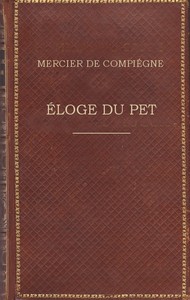
Éloge du pet by Claude-François-Xavier Mercier de Compiègne
Let’s set the scene: France, 1776. Powdered wigs, intricate manners, and salons full of intellectual debate. Into this world drops a small, anonymous pamphlet with a title that would make a courtier blush: Éloge du pet (In Praise of the Fart). Its author, hiding behind initials, was later revealed to be Claude-François-Xavier Mercier de Compiègne, a nobleman with a wonderfully subversive sense of humor.
The Story
There isn't a plot in the traditional sense. Think of it as a persuasive essay from a very committed lawyer. The 'client' is the humble fart. The book builds its case methodically. It starts by lamenting how this natural, universal act is unfairly mocked and hidden. Then, it launches into a defense, pulling examples from ancient history, famous figures who supposedly excelled at it, and its supposed medicinal benefits. It plays with the language of high philosophy and science to discuss the lowest of subjects, creating a constant, delightful clash of tones. The 'story' is the argument itself: can we, for just a moment, stop being embarrassed and appreciate the simple, democratic biology that connects us all?
Why You Should Read It
This book is a joy because it’s so much more than a potty joke. It’s a piece of secret history. Reading it, you get a direct line to the mischievous mind of an 18th-century intellectual who was tired of all the pretense. The humor is dry, clever, and surprisingly modern in its willingness to poke fun at social taboos. You can almost hear the giggles in a Parisian salon as it was passed around. Beyond the laughs, there’s a genuine, if quirky, point about human nature and hypocrisy. It reminds us that behind every era of strict manners, there’s always someone waiting to make a rude noise.
Final Verdict
This is the perfect book for the curious reader who loves odd slices of history, smart humor, and things that are just plain fun. It’s a fantastic conversation starter. Give it to a friend who enjoys philosophy, a history buff who’s read too many dry textbooks, or anyone who appreciates a well-executed bit of satire. It’s short, unforgettable, and proof that some subjects—and the human desire to laugh about them—are truly timeless.
This text is dedicated to the public domain. Use this text in your own projects freely.
Christopher Anderson
1 year agoI didn't expect much, but the author's voice is distinct and makes complex topics easy to digest. I will read more from this author.
Jennifer Brown
1 year agoTo be perfectly clear, the pacing is just right, keeping you engaged. Worth every second.
Sandra Lee
7 months agoFrom the very first page, the pacing is just right, keeping you engaged. One of the best books I've read this year.
Emily Taylor
2 years agoVery interesting perspective.


Matthew Wright
2 years agoThis is one of those stories where it provides a comprehensive overview perfect for everyone. Thanks for sharing this review.