
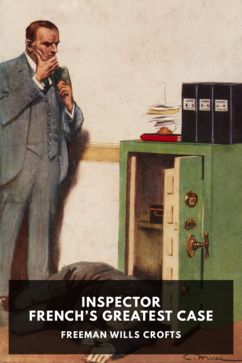
Inspector French’s Greatest Case - Freeman Wills Crofts
Let's be honest, sometimes you want a mystery that feels real, not like a fireworks display. Inspector French's Greatest Case is exactly that. Published in 1924, it introduces us to Joseph French, a detective who works more like a master craftsman than a dramatic hero.
The Story
The setup is classic: Gething and Co., diamond merchants, have been robbed. A huge haul of uncut stones is missing, and the night watchman is dead. At first, the evidence points squarely at a junior employee who's vanished. Case closed, right? Not for Inspector French. He's not convinced. Instead of making a quick arrest, he starts picking apart the 'obvious' facts. His investigation becomes a meticulous journey across England and even to France, checking alibis, tracing movements, and analyzing the physical mechanics of the crime itself. The real question isn't just who did it, but how they could have possibly pulled it off. The solution is a masterpiece of planning—and unraveling it is pure satisfaction.
Why You Should Read It
This book is a love letter to the puzzle. If modern thrillers are a sprint, this is a thoughtful, strategic chess match. French is a wonderfully grounded character. He gets frustrated, he hits dead ends, he drinks tea and worries about budgets. His genius is in his stubbornness and his attention to the boring details everyone else overlooks. Crofts, himself a railway engineer, brings that same logical, step-by-step problem-solving to his writing. You follow French's mind at work, and it makes you feel smart. When the pieces finally click, it's not because of a sudden clue or a confession; it's because the foundation of lies has been patiently dismantled, brick by brick.
Final Verdict
This is the perfect book for anyone who loves the 'howdunit' as much as the 'whodunit.' It's for fans of logic puzzles, Agatha Christie's more methodical plots, or anyone tired of loose ends. It's not a flashy book, but it's an incredibly solid and clever one. Think of it as the literary equivalent of a perfectly engineered bridge: its beauty is in its strength and function. If you want to see the blueprint of a classic golden-age mystery, start here.
Legal analysis indicates this work is in the public domain. Access is open to everyone around the world.
Betty Lewis
11 months agoGreat read!
Mary Sanchez
1 year agoWow.
Patricia King
10 months agoHonestly, the atmosphere created is totally immersive. Highly recommended.
Richard Walker
3 months agoGreat read!
Elizabeth Lopez
1 year agoCitation worthy content.