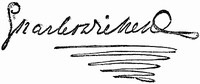
This volume documents a specific historical exchange: John Ruskin's letters to a clerical society in 1879, followed by written replies from clergy and laity, and an epilogue by Ruskin himself. The editor, the Rev. F. A. Malleson, frames the work as an attempt to apply "the highest standard in the interpretation of the Gospel message" to clerical practice. The excerpts show that the book is not a single treatise but a multi-voiced conversation, with Ruskin's provocations met by defenses of Anglican orthodoxy, critiques of his views on the Incarnation, and disagreements over the clergy's role. Malleson's introduction reveals that the letters were first read aloud to twenty-three clergy, and the published volume includes responses from societies in Ormskirk and Brighton. The catalog subjects—Ruskin's correspondence, Church of England clergy, and the Lord's Prayer—are accurate but understate the work's dialogic structure and its focus on institutional authority.
A Conversation, Not a Monograph
The excerpts make clear that this book is a record of debate, not a single argument. Malleson's introduction describes the letters as "addressed nominally to myself, as representing the body of clergy," and he notes that the volume will include "the original letters, the discussions, the letters which may be suggested, and a few comments of the Editor's." The replies from clergy such as the Rev. Archer Gurney and the Rev. J. H. A. Gibson directly challenge Ruskin's positions. Gurney, for instance, writes that Ruskin "fails utterly, hopelessly, to realize the Incarnation and its glorious consequences," while Gibson insists on the clergy's apostolic succession and their duty to teach the doctrines of the Church of England. This structure—Ruskin's letters, then rebuttals—means the reader encounters multiple perspectives, not a single authorial voice. The catalog subject "Ruskin, John, 1819-1900 -- Correspondence" is accurate, but the work is equally defined by the responses it provoked.
The Clergy's Self-Definition Under Scrutiny
Several replies focus on the question of clerical authority. The Rev. J. H. A. Gibson, writing from Brighton, directly addresses Ruskin's query: "Do we look upon ourselves as attached to any particular State, and bound to the promulgation of any particular tenets?" Gibson answers by defining clergy as "presbyters and deacons, deriving our authority from the episcopate" and asserts that the Anglican Church is "the legitimate representative of the Catholic Church of Christ in England." He compares Ruskin's question to asking a lawyer or doctor about their business, implying that the clergy's role is self-evident. The Rev. Canon Gray, in a letter dated October 13, 1879, demurs on specific points: Ruskin's supposition that the Thirty-nine Articles "were meant to include a summary of the Gospel" and his warning against being thankful only to the Son. These responses show that the book is partly a forum for clergy to articulate their own identity against Ruskin's lay perspective.
Practical Ethics vs. Doctrinal Orthodoxy
Malleson's introduction frames the letters as a turn toward "practical questions" after an excess of "doctrine and dogma." He praises Ruskin as "an eminent layman whose field of work lies quite as much in religion and ethics" as in art. Yet the replies reveal tension between this practical emphasis and doctrinal commitments. The Rev. Archer Gurney, while agreeing that "basing all upon the Father's love is essentially sound," argues that Ruskin's call for self-denial fails to account for the Incarnation's sanctification of human life. He writes: "We must enjoy the beautiful to vindicate enjoyment. We do not please God by casting all His choicest gifts away." This exchange highlights a central friction: Ruskin's moral urgency versus the clergy's insistence on sacramental and institutional frameworks. The catalog subject "Lord's prayer" is present in the title, but the excerpts show the debate extending well beyond that prayer to questions of charity, authority, and the purpose of the church.
Readers approaching this volume should expect a polyphonic text: Ruskin's letters are only one strand. The replies from clergy—ranging from agreement to sharp critique—are essential to understanding the work's argumentative fabric. Malleson's editorial role, as both organizer and commentator, further shapes the presentation. The book is best read as a historical document of a specific clerical conversation in late Victorian England, not as a systematic theology. Pay attention to the dates and locations of the replies, which ground the debate in particular societies and moments.
Reading Malleson's record of Ruskin’s letters, I felt that old ache—the hope that faith might be lived plainly, not argued over. His restlessness with clerical formality lingers. Later, wandering through his essays in On the Old Road Vol. 1 (of 2) A Collection of Miscellaneous Essays and Articles on Art and Literature — Story, Setting & Ideas, I found the same searching tone, quieter here, more resigned. Just a man thinking aloud, really.