About 30 minutes
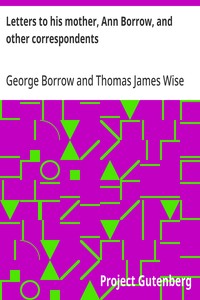
Letters to his mother, Ann Borrow, and other correspondents — A Reader’s Guide
Fantasy Juvenile Worlds
6,861 recorded words. 0 minutes difference from this book's estimate.
View Gutenberg source #28784
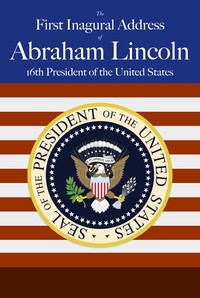
Abraham Lincoln's First Inaugural Address — Reading Companion can be approached with a clearer sense of reading commitment from its source measurements: 6,691 words, 30 min estimated reading time, and 1 detected text section.
The text analysis averages about 26.3 words per sentence, while the detected sections provide another way to judge how the source is divided.
Project Gutenberg metadata also associates the work with “United States -- Politics and government -- 1861-1865,” connecting these edition facts with the source record’s subject description.
Explore this collection
These alternatives are selected using recorded categories and estimated reading time.
About 30 minutes
Fantasy Juvenile Worlds
6,861 recorded words. 0 minutes difference from this book's estimate.
View Gutenberg source #28784About 32 minutes
Fantasy Juvenile Worlds
7,269 recorded words. 2 minutes difference from this book's estimate.
View Gutenberg source #49477About 21 minutes
Fantasy Juvenile Worlds
4,689 recorded words. 9 minutes difference from this book's estimate.
View Gutenberg source #10510Search stored excerpts and compare books → Choose by your preferences →
Choices use stored catalog measurements. Estimates vary with reading speed. A shared category is a catalog label, not a claim that two books have the same argument or literary quality.
Search reads excerpt text stored with this catalog and links to its associated Gutenberg record. The connection is stored in the site database; this tool does not recheck that every excerpt is word-for-word identical to that external record. Excerpt search does not cover every chapter and does not verify historical publication dates.
Catalog snapshot checked: 2026-09-25. Coverage: 96 public books, 96 available source excerpts.
Read the complete public-domain text at its original source.
Read on Project GutenbergAbraham Lincoln's First Inaugural Address, delivered on March 4, 1861, is a carefully calibrated constitutional argument delivered at the brink of civil war. The catalog places it under "Fantasy & Juvenile Worlds"—a category that bears no relation to the text's content. The address is a dense legal and political document, not a work of imagination for young readers. Lincoln opens by acknowledging "apprehension" among Southern states and immediately quotes his own previous declaration: "I have no purpose, directly or indirectly, to interfere with the institution of slavery in the States where it exists." This is not fantasy; it is a precise, high-stakes rhetorical performance.
Lincoln structures the address around constitutional provisions and legal obligations. He quotes the fugitive slave clause verbatim and insists that the Constitution must be obeyed. He argues that secession is legally void: "the Union of these States is perpetual." The speech repeatedly reassures Southern states that their property and peace are not endangered, citing his own published speeches as evidence. Lincoln also reads a Republican platform resolution denouncing "lawless invasion by armed force of the soil of any State or Territory." The tone is legalistic, not emotional, though the stakes are existential.
Lincoln carefully delineates presidential power: "The chief magistrate derives all his authority from the people, and they have conferred none upon him to fix terms for the separation of the states." He frames his duty as preserving the government as it came to him. The address appeals to "patient confidence in the ultimate justice of the people" and warns that no administration can "very seriously injure the government in the short space of four years." This section reveals Lincoln's strategic restraint—he avoids threats while firmly rejecting secession.
The final paragraphs shift from legal argument to direct, personal appeal. Lincoln addresses "my dissatisfied fellow-countrymen" and declares: "The government will not assail you. You can have no conflict without being yourselves the aggressors." He invokes "the mystic chords of memory" and "the better angels of our nature"—phrases that have become iconic. Yet the address as a whole is not sentimental; it is a lawyerly brief punctuated by a single, powerful emotional crescendo. The catalog's "Fantasy" label is misleading; this is a work of political philosophy and crisis management.
Readers should approach this address as a primary source in American political rhetoric, not as a work of fantasy. The text rewards attention to its legal reasoning, its strategic omissions, and its careful calibration of tone. Lincoln's arguments are grounded in the Constitution and his own prior statements; the famous closing is the exception, not the rule. The Project Gutenberg edition includes no annotations, so readers may wish to consult historical context to fully grasp the address's significance.
The rain made Lincoln’s words feel heavier, that closing plea for “the better angels of our nature” lingering in the room. Later, I found myself drifting toward a different sort of rebellion, a lost prince’s cause. There’s a strange kinship between desperate speeches, whether in 1861 or ’45. I set Lincoln aside for The Lyon in Mourning, Vol. 1 or a collection of speeches, letters, journals, etc. relative to the affairs of Prince Charles Edward Stuart — Key Ideas to Explore, and the afternoon took a quieter turn.
Save your reaction, strongest insight, and memorable passage.