About 97 minutes
Hunting Sketches — Context and Discussion
Fantasy Juvenile Worlds
22,199 recorded words. 2 minutes difference from this book's estimate.
View Gutenberg source #814
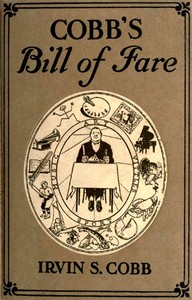
The source record for Cobb's Bill-of-Fare — Themes and Context measures this digital text at 22,605 words, 1 hr 39 min estimated reading time, and 3 detected text sections.
The text analysis averages about 25.8 words per sentence, while the detected sections provide another way to judge how the source is divided.
Project Gutenberg metadata also associates the work with “Essays,” connecting these edition facts with the source record’s subject description.
Explore this collection
These alternatives are selected using recorded categories and estimated reading time.
About 97 minutes
Fantasy Juvenile Worlds
22,199 recorded words. 2 minutes difference from this book's estimate.
View Gutenberg source #814About 92 minutes
Fantasy Juvenile Worlds
21,112 recorded words. 7 minutes difference from this book's estimate.
View Gutenberg source #76201About 73 minutes
Fantasy Juvenile Worlds
16,623 recorded words. 26 minutes difference from this book's estimate.
View Gutenberg source #59710Search stored excerpts and compare books → Choose by your preferences →
Choices use stored catalog measurements. Estimates vary with reading speed. A shared category is a catalog label, not a claim that two books have the same argument or literary quality.
Search reads excerpt text stored with this catalog and links to its associated Gutenberg record. The connection is stored in the site database; this tool does not recheck that every excerpt is word-for-word identical to that external record. Excerpt search does not cover every chapter and does not verify historical publication dates.
Catalog snapshot checked: 2026-09-25. Coverage: 96 public books, 96 available source excerpts.
Read the complete public-domain text at its original source.
Read on Project GutenbergCobb's Bill-of-Fare is structured as a menu, with four courses: Vittles, Music, Art, and Sport. The opening essay, “Vittles,” begins with a man in a restaurant longing for “regular food,” a desire that launches a comic survey of American eating habits. Cobb’s voice is colloquial and exaggerated, comparing restaurant sauces to “the stuff that was left over from graining the woodwork.” The essays move from personal craving to broader cultural commentary, using specific, often absurd, examples to skewer pretension and celebrate plainness.
The book’s title is literal: each section is a course. “Vittles” covers food, “Music” sound, “Art” visual culture, and “Sport” games. This framework allows Cobb to shift between topics while maintaining a consistent, conversational tone. The menu metaphor is not just decorative; it shapes the pacing. Each essay opens with a personal anecdote or a pointed observation, then expands into a series of comic examples. In “Vittles,” the narrator’s quest for “regular food” leads to a rant against fancy restaurants and a nostalgic look at holiday feasts. The structure mimics a meal: appetizer, main course, palate cleanser, dessert. Cobb uses this to control the reader’s attention, varying the density of jokes and the length of paragraphs.
Cobb repeatedly contrasts the present with a remembered past, often the 1880s or 1890s. In “Art,” he describes a time when furniture was “new—the newer the better,” and antiques were for the poor. He evokes the smell of varnish and the feel of “creaky shoes” at the World’s Fair. These sensory details—sticky furniture, sore feet, tears from exhaustion—ground his humor in physical experience. The past is not idealized; it is raw and provincial. Cobb admits that taste was “crude and raw,” yet he defends it. The recurring image of the “Old Master” painting that looks like a “liver pad” ties together his skepticism of high art and his preference for the familiar, like the picture of Custer’s Last Stand.
Cobb’s essays move rapidly from one setting to another, often within a single paragraph. In “Vittles,” he jumps from a fancy restaurant to a quick lunch counter, then to a childhood holiday table. In “Art,” he shifts from a parlor funeral to the Art Building in Chicago. These transitions are abrupt but purposeful: they create a sense of abundance and variety, like a menu. The movement also highlights contrasts—between the expensive and the cheap, the new and the old, the genuine and the fake. Cobb uses these shifts to expose hypocrisy. For example, he notes that the same people who now worship antiques once preferred golden oak. The rapid scene changes mirror the restless, satirical energy of the prose.
Cobb’s narrator is a knowing, slightly world-weary observer who speaks directly to the reader. He uses colloquialisms (“doggone ’em!”) and self-deprecating asides. In “Vittles,” he admits to having “tried it all” from “alphabet soup to animal crackers.” This voice is consistent across sections, creating a unified persona. The narrator is not an expert but a fellow traveler, someone who has been fooled by fancy food and art but now sees through them. He is nostalgic but not sentimental; he mocks his own past tastes. The humor comes from exaggeration and concrete detail, not abstraction. The voice is the book’s strongest structural element, holding together the disparate topics.
Cobb’s Bill-of-Fare rewards readers who enjoy period humor and social satire. The essays are best approached as a sequence, letting the menu structure guide the reading. Pay attention to the recurring contrasts between past and present, and the way Cobb uses specific, often absurd, examples to make his points. The illustrations by Peter Newell and James Preston add another layer of visual comedy. This is not a book for those seeking plot or character development, but for those who appreciate a sharp, nostalgic, and irreverent voice.
Years at this desk have taught me how a book can hold a whole table of appetites — Cobb’s savory pages, so full of laughter and local warmth. There is a quieter meal, though, in Abraham Lincoln’s First Inaugural Address — Reading Companion, where the same earnest, weary humor of a plain man meets the country’s hungriest hour. Both speak of feeding a people, one with jokes, the other with hope.
Save your reaction, strongest insight, and memorable passage.