About 99 minutes
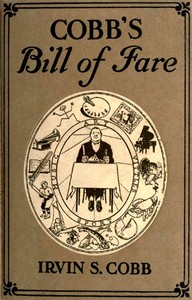
Cobb's Bill-of-Fare — Themes and Context
Fantasy Juvenile Worlds
22,605 recorded words. 2 minutes difference from this book's estimate.
View Gutenberg source #24595
The catalog record for Hunting Sketches — Context and Discussion provides practical reading context through 22,199 words, 1 hr 37 min estimated reading time, and 3 detected text sections.
The text analysis averages about 25.2 words per sentence, while the detected sections provide another way to judge how the source is divided.
Project Gutenberg metadata also associates the work with “Essays,” connecting these edition facts with the source record’s subject description.
Explore this collection
These alternatives are selected using recorded categories and estimated reading time.
About 99 minutes
Fantasy Juvenile Worlds
22,605 recorded words. 2 minutes difference from this book's estimate.
View Gutenberg source #24595About 92 minutes
Fantasy Juvenile Worlds
21,112 recorded words. 5 minutes difference from this book's estimate.
View Gutenberg source #76201About 73 minutes
Fantasy Juvenile Worlds
16,623 recorded words. 24 minutes difference from this book's estimate.
View Gutenberg source #59710Search stored excerpts and compare books → Choose by your preferences →
Choices use stored catalog measurements. Estimates vary with reading speed. A shared category is a catalog label, not a claim that two books have the same argument or literary quality.
Search reads excerpt text stored with this catalog and links to its associated Gutenberg record. The connection is stored in the site database; this tool does not recheck that every excerpt is word-for-word identical to that external record. Excerpt search does not cover every chapter and does not verify historical publication dates.
Catalog snapshot checked: 2026-09-25. Coverage: 96 public books, 96 available source excerpts.
Read the complete public-domain text at its original source.
Read on Project GutenbergAnthony Trollope's Hunting Sketches is a series of character portraits that anatomize the English hunting field as a social microcosm. Rather than a manual on equestrian technique, the work dissects the motives, pretensions, and unspoken hierarchies among those who ride to hounds. Trollope's narrator adopts a tone of amused, knowing detachment, classifying hunters by their relationship to the sport—from the man who hunts and does not like it to the parson who must reconcile his cloth with the chase.
The catalog subjects list 'Essays' and 'Fox hunting,' but the excerpts reveal a work more concerned with human nature than with the mechanics of the hunt. Trollope uses the hunt as a stage for observing vanity, endurance, and the performance of belonging. The sketches are less about foxes than about the social types that gather in the field.
Trollope opens with a paradox: many who hunt do not actually enjoy it. He observes that 'their name and number is legion,' and that among those who hunt because it is 'the thing to do,' the reluctant majority prevails. The narrator distinguishes between those who simply cannot ride and those who, though they stick to roads and gates, are genuinely attached to the sport. The true 'man who hunts and doesn't like it' has no system and no clear aim; he tries in spurts to ride hard, but even with 'cherry-brandy' he never likes it.
Trollope invokes the illustrator John Leech, noting that Leech's fame as a pictorial chronicler of the hunt depended on capturing this very type. The reference to 'Briggs'—a 'full-blooded, up-apt, awkward, sanguine man'—serves as a foil: Briggs could like anything, but the reluctant rider is a figure of pathos, seeking 'honour where honour was not to be found.' The sketch implies that social pressure, not genuine passion, fills the hunting field with unhappy participants.
In contrast to the reluctant rider, Trollope presents a figure who never jumps but possesses a different kind of mastery: the man who knows the country. This hunter follows roads and gates, but his knowledge of the fox's likely line, the stopped drains, and the history of each covert makes him a guide to the lost. Trollope describes how such a man can reconstruct a run with precision, naming the farms, woods, and turnpikes the fox crossed, while the 'unfortunates' who boasted of being with the hounds are gently corrected.
The narrator emphasizes that this skill requires 'the most patience, the keenest observation, the strongest memory, and the greatest efforts of intellect.' It is a form of hunting that earns respect and even temporary authority: 'He was the chief of men there.' The sketch elevates intellectual mastery over physical daring, suggesting that the true hunter is not the one who jumps highest but the one who understands the landscape and the animal's behavior.
Though the excerpts do not include the full sketch 'The Lady Who Rides to Hounds,' the table of contents signals that Trollope devotes a chapter to women in the hunting field. The catalog subject 'Fox hunting' might imply a male-dominated world, but Trollope's inclusion of a lady rider suggests he attends to gender dynamics within the sport. The other sketches—the hunting farmer, the parson, the master of hounds—further indicate a systematic survey of social roles.
The narrator's voice, consistently ironic and observant, treats each type with a mixture of sympathy and satire. The farmer is likely portrayed with an eye to his practical relationship to the land, the parson with attention to the tension between clerical duty and sporting pleasure. Together, these sketches form a taxonomy of Victorian rural society, using the hunt as a lens to examine class, profession, and personal character.
Trollope's Hunting Sketches rewards readers who appreciate social observation over action. The excerpts show a writer more interested in the psychology of the hunter than in the chase itself. Readers should attend to the narrator's tone—dry, amused, and occasionally cutting—and to the way each sketch builds a portrait through specific details of behavior and speech. The work is best read as a series of character studies, not as a guide to hunting practice.
There’s a quiet sort of loyalty in Trollope’s sketches, the way the hunt’s rituals hold people together even when their reasons differ. It reminded me of something older—the earnest, desperate voices gathered in The Lyon in Mourning, Vol. 1 or a collection of speeches, letters, journals, etc. relative to the affairs of Prince Charles Edward Stuart — Key Ideas to Explore. Both are records of belonging, of people trying to keep faith with a shared story.
Your answers remain private and are stored only in this browser.