About 125 minutes
Life's Minor Collisions — Reading Companion
Science Fiction Utopias
28,602 recorded words. 30 minutes difference from this book's estimate.
View Gutenberg source #37899
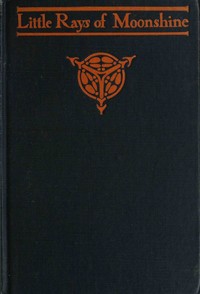
The catalog record for Little rays of moonshine — Reading Companion provides practical reading context through 35,544 words, 2 hr 35 min estimated reading time, and 25 detected text sections.
The text analysis averages about 17.8 words per sentence, while the detected sections provide another way to judge how the source is divided.
Project Gutenberg metadata also associates the work with “English wit and humor,” connecting these edition facts with the source record’s subject description.
Explore this collection
These alternatives are selected using recorded categories and estimated reading time.
About 125 minutes
Science Fiction Utopias
28,602 recorded words. 30 minutes difference from this book's estimate.
View Gutenberg source #37899About 190 minutes
Science Fiction Utopias
43,673 recorded words. 35 minutes difference from this book's estimate.
View Gutenberg source #25523About 117 minutes
Science Fiction Utopias
26,842 recorded words. 38 minutes difference from this book's estimate.
View Gutenberg source #46759Search stored excerpts and compare books → Choose by your preferences →
Choices use stored catalog measurements. Estimates vary with reading speed. A shared category is a catalog label, not a claim that two books have the same argument or literary quality.
Search reads excerpt text stored with this catalog and links to its associated Gutenberg record. The connection is stored in the site database; this tool does not recheck that every excerpt is word-for-word identical to that external record. Excerpt search does not cover every chapter and does not verify historical publication dates.
Catalog snapshot checked: 2026-09-25. Coverage: 96 public books, 96 available source excerpts.
Read the complete public-domain text at its original source.
Read on Project GutenbergA. P. Herbert's Little Rays of Moonshine opens with a confession: the author has invented a new telephone game, one that is 'thoroughly discreditable, anti-social' and forced upon him by circumstance. The game involves pretending a wrong number is correct, leading callers into a 'morass of mystification.' This sets the tone for a collection that delights in linguistic mischief and bureaucratic satire. Herbert, a regular contributor to Punch, uses the telephone as a stage for absurd role-play, adopting a 'high feminine voice' to impersonate a housemaid or government typist. The excerpt reveals a writer keen on exposing the absurdities of modern communication and institutional jargon.
In 'Wrong Numbers,' Herbert transforms a mundane annoyance into a performance. He describes his method with clinical precision: answering in a 'high feminine voice,' then switching to a 'gruff railway-voice' for the Goods and Transit Department. The dialogue is a duet of deception, with Herbert's character feigning obsequiousness ('Oh, thank you!') while the caller remains oblivious. This sketch relies on the gap between what the caller believes and what the reader knows—a gap Herbert exploits for comedy. The telephone becomes a prop for improvisation, and Herbert's delight in his own trickery is evident. He even notes the 'considerable skill' required, framing the game as a craft. The piece is less about technology than about the social performances technology enables.
The playlet 'The Book of Jonah' showcases Herbert's ear for Irish dialect and his willingness to let a biblical story descend into farce. Characters speak in rhythmic, colloquial cadences: 'Sure, it's the grand position you have entirely now.' The humor arises from the collision between the miraculous—Jonah being swallowed by a whale—and the mundane concerns of the Irish villagers, who debate pensions and remarriage. When the presumed-dead Michael Joner returns, his wife's first thought is of her broken engagement: 'And what call had you to come back from the dead without a word of warning?' Herbert uses dialect not for mockery but for character: Mrs. J.'s pragmatism and Timothy J.'s scheming are revealed through their speech. The statue erected in Joner's honor becomes a running joke, as the living man protests his own monument.
Several pieces target the language of officialdom. In 'Wrong Numbers,' Herbert mimics the bureaucratic tone of 'Motor-vans and Haulage Department' and 'Goods and Transit Department,' exposing the absurdity of departmental names. The essay 'The Genius of Mr. Bradshaw' (from the table of contents) likely continues this theme, given Bradshaw's famous railway timetable. Herbert's method is to take institutional language at face value, then push it to its logical extreme. The telephone game works because the caller accepts the impersonation as plausible; the satire works because the reader recognizes the real-world counterparts. Herbert does not need to exaggerate much—the pomposity of official titles is already ripe for comedy. His sketches function as a gentle corrective, inviting readers to laugh at the systems they navigate daily.
The excerpts reveal a consistent authorial voice: wry, self-aware, and fond of digression. Herbert often inserts meta-commentary, as when he admits his game is 'discreditable' but justified. The pieces vary in form—some are first-person essays, others are dialogues or playlets—but all share a focus on precise diction. In 'Wrong Numbers,' the narrator's shift from 'sweet sympathy' to 'black despair' is catalogued with comic exactness. The dialogue in 'The Book of Jonah' uses repetition ('And him with the rheumatics—God rest his soul!') to build rhythm. Herbert's humor is verbal rather than physical; it depends on the reader's ear for tone and timing. The collection, originally published in 1921, reflects a post-war appetite for light satire that punctures pretension without malice.
Herbert's Little Rays of Moonshine rewards readers who attend to the nuances of dialogue and the absurdities of everyday language. The pieces are best approached as performances: read the telephone sketches aloud to catch the shifts in voice, and imagine the Irish playlet staged. The humor is of its time—rooted in 1920s British life—but the techniques of impersonation and institutional satire remain sharp. Let the author's own playful irreverence guide your reading; these are not essays to be studied but jokes to be savored.
That rainy afternoon, I kept returning to Herbert’s sketch about a man arguing with a telephone operator, his patience fraying into absurd wordplay. It left me thinking about how we cling to small irritations, making them ours. Later, browsing the shelf, I pulled down Prejudices, first series — Background and Themes and found the same stubborn affection for pet peeves, only less forgiving. Both felt like conversations with someone who’d noticed too much and wouldn’t let it go.
Create a short personal record of your experience with this book.