About 265 minutes
Prejudices, second series — Key Ideas to Explore
Historical Psychological Social Fiction
60,927 recorded words. 17 minutes difference from this book's estimate.
View Gutenberg source #53467
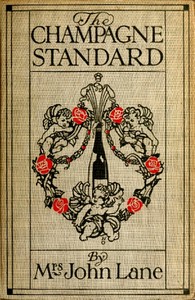
Before opening The Champagne Standard — A Reader’s Guide, the edition data offers a quick orientation: 64,858 words, 4 hr 42 min estimated reading time, and 6 detected text sections.
The text analysis averages about 23.0 words per sentence, while the detected sections provide another way to judge how the source is divided.
Project Gutenberg metadata also associates the work with “Essays,” connecting these edition facts with the source record’s subject description.
Explore this collection
These alternatives are selected using recorded categories and estimated reading time.
About 265 minutes
Historical Psychological Social Fiction
60,927 recorded words. 17 minutes difference from this book's estimate.
View Gutenberg source #53467About 305 minutes
Historical Psychological Social Fiction
69,931 recorded words. 23 minutes difference from this book's estimate.
View Gutenberg source #37387About 249 minutes
Historical Psychological Social Fiction
57,217 recorded words. 33 minutes difference from this book's estimate.
View Gutenberg source #3140Search stored excerpts and compare books → Choose by your preferences →
Choices use stored catalog measurements. Estimates vary with reading speed. A shared category is a catalog label, not a claim that two books have the same argument or literary quality.
Search reads excerpt text stored with this catalog and links to its associated Gutenberg record. The connection is stored in the site database; this tool does not recheck that every excerpt is word-for-word identical to that external record. Excerpt search does not cover every chapter and does not verify historical publication dates.
Catalog snapshot checked: 2026-09-25. Coverage: 96 public books, 96 available source excerpts.
Read the complete public-domain text at its original source.
Read on Project GutenbergThe preface of The Champagne Standard finds the author stalled before a blank page, listening to rain and the sea, and invoking supernatural aid in a tone that is both self-deprecating and theatrical. This opening immediately establishes the book’s voice: a conversational, essayistic style that blends personal anecdote with broader social commentary. The setting—a room with Georgian windows, a red plush couch, and a dim electric light—grounds the observations in a specific, early-20th-century domestic interior. The author’s frustration with writing a preface mirrors the book’s central tension between the desire for authenticity and the pressure to perform a certain social role.
The preface is not merely an apology but a demonstration of the author’s method. She begins by describing her physical surroundings—the fire, the rain, the sea—and then pivots to a meditation on writer’s block, invoking Faust and the supernatural. This movement from concrete detail to abstract reflection is the book’s characteristic gesture. The preface also introduces a recurring motif: the contrast between what is expected (a proper preface) and what actually emerges (a series of digressions). The author’s admission that she has “nothing to say” is disingenuous; she is already performing the very observations the book will explore. Readers should note how the preface’s self-consciousness about its own construction sets the stage for the essays that follow, where the author will similarly dissect social rituals with a mixture of irony and earnestness.
In the excerpt on shopping, the author contrasts male and female spending habits with pointed humor. Men, she claims, are impatient and direct: “If you like it, take it, but don’t waste people’s time.” Women, by contrast, are portrayed as “penny wise” yet extravagant in matters of display, willing to “draggle their skirts through the mud” to save a cab fare while spending freely on ornament. The essay extends this logic to dining: women eat poorly when alone—a “sultana cake, a tart, or an ice”—while men demand “a ‘ripping’ good dinner and a bottle of extra good wine.” The author’s target is not women per se but a system that rewards visible consumption over genuine comfort. She notes that “it is only the rich and great the world permits to be shabby,” a line that encapsulates the book’s critique of class and appearance.
The title phrase appears to denote a benchmark of luxury and display that governs social behavior. In the excerpts, the author repeatedly returns to the idea that people sacrifice substance for show: families maintain a carriage they cannot afford, women starve themselves to buy sable, and dinner parties serve poor food with elaborate service. The “champagne standard” is not about actual champagne but about the performance of wealth and taste. The author’s observations are precise: she notes the “three footmen and a butler” serving “a tough chop of New Zealand lamb,” and the “magnificent carriage—unpaid for—and a superb coachman and footman whose wages are owing.” These details ground the metaphor in everyday absurdities. Readers should watch for how the standard shifts between nations—England and America—as the book compares their respective hypocrisies.
The author’s voice is central to the book’s appeal. She writes in a colloquial, sometimes breathless style, using rhetorical questions, dashes, and exclamations. Sentences like “Did you ever see a man go from one shop to another to get a necktie ‘tuppence’ cheaper?” create a sense of direct address. The structure is loose, moving from topic to topic without rigid transitions, but each paragraph builds on a single observation. The excerpts show a preference for concrete examples over abstract argument: the girl who “slums” in the East End, the friend who “cannot eat à la carte” because it is “like eating money.” This method gives the essays a vivid, anecdotal quality. Readers should approach the book as a series of linked conversations rather than a systematic treatise, allowing the author’s wit and detail to carry the argument.
The catalog subjects list “England — Social life and customs — 20th century” and “United States — Social life and customs — 20th century,” and the preface mentions “two great nations.” The excerpts, however, do not always specify which nation is being discussed; the shopping and dining observations could apply to either. This ambiguity suggests that the author sees the “champagne standard” as a transatlantic phenomenon. When she does distinguish, it is often through small details: the English seaside setting of the preface versus the American references to “Smith’s” and cab fares. The book likely uses comparison to highlight shared human foibles rather than to argue for national superiority. Readers should note where the author explicitly names a country and where she leaves the setting vague, as this reveals her rhetorical strategy.
The Champagne Standard rewards a reader who enjoys sharp, conversational essays that use everyday scenes to probe deeper social codes. The excerpts suggest a book that is more interested in observation than in argument, more amused than indignant. To get the most from it, pay attention to the small details—the price of a necktie, the number of footmen, the quality of the lamb—and consider how they accumulate into a portrait of an era’s anxieties about money, class, and authenticity. The author’s voice is the thread that ties these observations together; trust it to guide you through the digressions.
That old champagne metaphor keeps surfacing whenever I watch people choose between what they can afford and what they want others to see. It reminded me of something quieter, the strange formality of two men writing letters until they had no choice but to meet. There's a weight in that Correspondence, between the late Commodore Stephen Decatur and Commodore James Barron, which led to the unfortunate meeting of the twenty-second of March — Edition Insights that lingers like a held breath.
Capture what you thought, learned, and would like to remember.